

Picture two people who both bought an investment property in Victoria around the same time, for almost the same price. One bought a brand-new house, fresh off the build. The other bought a home that already had an owner before them, put up just a couple of years earlier. Same state, same rough budget, similar-sized properties.
Then their depreciation schedules landed, and the two reports were $95,570 apart over the life of the property.
That’s not a typo, and it’s not because one house is nicer than the other. It comes down to something much simpler: who owned the place first, and when it changed hands. Once you see the two reports side by side, it makes a lot more sense, so let’s walk through them.
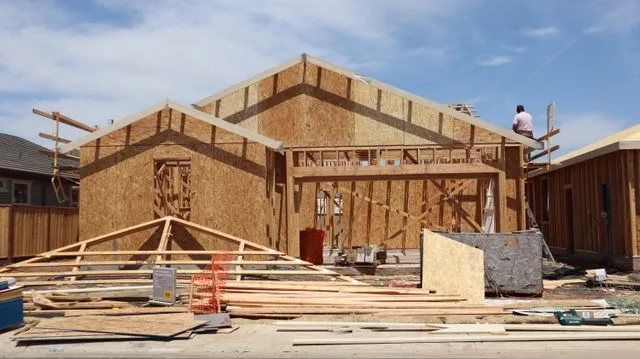
Meet the two properties:
Property A is a new build. It’s the first time anyone has owned it. The buyer purchased it for $680,000, and the build was finished right around settlement in mid-2026.
Property B is a purchased, established home. It was built in early 2024, so it isn’t old by any stretch, but the buyer wasn’t the first owner. Someone lived there before them. This one sold for $683,000, settling in late 2025.
Two properties, similar price, both fairly new. If you only looked at the sale prices, you’d expect the depreciation to land somewhere close together too. Here’s what the real numbers looked like.

| Property A (new build, first owner) | Property B (purchased, second owner) | |
|---|---|---|
| Purchase price | $680,000 | $683,000 |
| Built | Mid-2026 | Early 2024 |
| Settled | Mid-2026 | Late 2025 |
| Capital works claim (the building itself) | $346,761 over the life of the building | $294,727 (what’s left from the purchase date) |
| Plant and equipment claim (everything removable) | $43,536 over the life of those items | $0 |
| Total lifetime depreciation | $390,297 | $294,727 |
These figures come from two real TDA depreciation reports, with identifying details removed. They describe these two specific properties only, they’re not a forecast of what any other property will produce.
How does depreciation on an investment property actually work?
Before we dig into why the numbers landed so differently, here’s the plain version of how any depreciation schedule works.
Tax depreciation lets property investors claim deductions for the wear and tear of a building and the things inside it. These deductions can lower taxable income, which may reduce the tax payable, depending on individual circumstances. There are two buckets:
- Capital works is the building itself: the slab, the walls, the roof, the bits you can’t unscrew and carry out the front door. You can claim capital works deductions at a rate of 2.5% a year for up to 40 years from the date the construction was completed (a small number of building types use 4% over 25 years instead). Worth flagging early: this claim is based on what the building actually cost to construct, not what you paid to buy it. Land value, the premium a hot market adds to the sale price, none of that comes into it.
- Plant and equipment is everything you could theoretically take with you: ovens, carpets, air conditioning, hot water systems, blinds. These are depreciated over each item’s own effective life, using either the prime cost or diminishing value method. The ATO sets those effective lives out in the Income Tax Assessment (Effective Life of Depreciating Assets) Determination 2025.
Property B, even though it’s the “older” of our two properties, still had close to $295,000 left in its capital works bucket. That’s because the 40-year clock starts on the building’s completion date, not on whenever a given owner happens to buy it. Most of that 40-year window was still ahead of this buyer.
Where the two properties really pull apart is the second bucket.

Can you claim depreciation on an older, purchased investment property?
This is usually the real question behind “can you claim depreciation on old investment property” searches, and it trips a lot of people up. The building’s age isn’t what matters here. What matters is when you bought it, and whether anyone lived in it before you.
Since 9 May 2017, plant and equipment deductions on previously used items in a second-hand residential property are restricted to the original owner or installer. If you buy new property, install new plant and equipment yourself, buy something substantially renovated, or you’re dealing with commercial property, none of that applies to you. And importantly, the capital works side is completely unaffected either way, and for most residential properties, it’s the larger of the two claims regardless.
Property B was built in 2024, so by any normal definition it’s a young building. But because its buyer was the second owner, everything already installed when they bought it, the carpets, the blinds, the hot water system, sits outside what they can claim. That’s the whole plant and equipment line reading zero on their report. It’s got nothing to do with the building’s age and everything to do with the ownership history before this buyer signed on. Here’s a full breakdown of how Division 40 and Division 43 work if you want the details.
One more precise point worth having, even though it doesn’t change the outcome for either property in this example: this restriction is aimed at individuals, trusts and SMSFs buying residential property. It doesn’t apply to certain excluded entities, namely corporate tax entities, super funds other than SMSFs, public unit trusts and managed investment trusts, and it never applied to commercial property in the first place.
Both properties here are owned by individuals, so it’s a moot point for this comparison, but if you’re buying through a company or a large fund, this particular rule isn’t the one to worry about.
So what’s actually behind the $95,570 gap?
It would be easy to look at that number and blame the 2017 rule for the whole thing. It’s only responsible for part of it. There are really three separate things stacked on top of each other:
- The missed plant and equipment claim: $43,536. This is what Property A’s first owner gets over the life of those items, and it’s the exact amount Property B’s owner can’t access because they weren’t first through the door. Of the three, this is the one you can genuinely pin on the post-2017 rule.
- A difference in what each house cost to build: $37,881. Property A simply cost more to construct than Property B did ($346,761 against $308,880 in qualifying capital works). Two different buildings, two different price tags, and nothing to do with any rule.
- Time already used up on the building’s 40-year clock: $14,153. Property B’s capital works window started ticking down when it was built in 2024, not when this particular owner bought it. Close to two years had already gone by under the previous owner before this buyer even signed the contract.
Add those three together ($43,536 + $37,881 + $14,153) and you land on the full $95,570 gap.
Only the first one, the $43,536, is what the post-2017 rule is actually costing someone in a comparison like this. The rest comes down to the two buildings simply being different, and one clock having a head start on the other.
Do you need a depreciation schedule for a purchased, second-hand property?
Short answer: yes, and Property B is a good example of why. Even with its plant and equipment claim sitting at zero, that property still has close to $295,000 in capital works deductions available over what’s left of the building’s life. None of that gets used without a schedule behind it. A schedule doesn’t invent a deduction that wasn’t there, it’s what turns an existing entitlement into something your accountant can actually apply.
Is a depreciation schedule worth it?
It depends on the property, but going by these two, the answer’s a fairly comfortable yes for both. Even the more limited of the two schedules represents close to $295,000 in deductions across the life of the building, against a report that starts at a few hundred dollars. Whether it stacks up for your own property comes down to when it was built, when you bought it, and whether you were first in the door or not, which is precisely what a schedule tells you before you commit to getting one done.
Quantity surveyors are recognised by the ATO under TR 97/25 as appropriately qualified to estimate construction costs where the actual costs aren’t known. Accountants, valuers and real estate agents generally aren’t.
Getting your own schedule
Residential schedules start from $450 plus GST, and reports are completed within 3 to 5 business days once we’ve received everything we need and the inspection’s done. If we can’t deliver at least double our fee in deductions in the first full financial year, there’s no charge for our service.
Every property’s different, so speak to your accountant about how any of this applies to your own tax position before relying on it.
Order a depreciation schedule, or if you’re starting from further back, read what a depreciation schedule is first.