

A quantity surveyor is a construction cost professional. For property investors, the relevant work is estimating what a building cost to construct and identifying the items inside it that lose value over time, so those figures can be used to calculate depreciation deductions.
Depreciation, in plain terms, recognises that a building and the items inside it have a limited life. The cost of them is claimed across that life rather than in one go, so there’s no cash going out in the year you claim it.
The ATO recognises quantity surveyors (TR 97/25) as appropriately qualified to estimate construction costs where actual costs are not known. Accountants, valuers and real estate agents generally are not.
The ATO says the same thing on its own capital works deductions guidance: where you can’t work out the actual construction costs, you can get an estimate from a quantity surveyor or another independent qualified person.
The quantity surveyor produces the figures. Your accountant decides how they apply to your return.
What is a quantity surveyor?
A quantity surveyor measures, values and manages the cost of construction work. The profession covers a lot of ground: cost planning before a project starts, measuring quantities from drawings, valuing progress claims during a build.
The part that matters to an investor is narrower. It’s the ability to look at a finished building and work out, with evidence behind it, what it cost to build and what’s inside it that can be depreciated.
Quantity surveyors working in Australia are typically members of the Australian Institute of Quantity Surveyors.
TDA is an AIQS-certified practice.
What does a quantity surveyor do for a property investor?
There are three things a quantity surveyor does for a property investor.
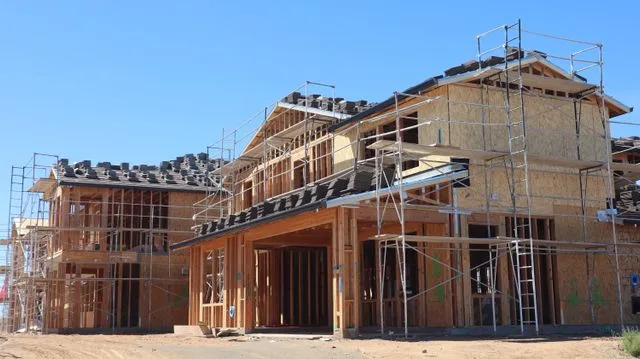
- Estimates construction costs Most investors buy an established property and have no idea what it costs to build. The original invoices are long gone, and the previous owner often doesn’t have them either. A quantity surveyor inspects the property, identifies the construction, and estimates the original cost using industry cost data and construction experience.
- Identifies and values the items inside. Ovens, carpets, air conditioning, blinds, hot water systems. Each has a cost and an effective life, which is the number of years the ATO accepts an item will last. Each is treated differently in a claim and a QS can identify items the investor was unsure they could claim.
- Document it for your accountant. The output is a report setting out the construction costs and the items that can be depreciated, with the relevant deductions worked out across the claim period.
What is a quantity surveyor report?
In the property investment context, one of the most common quantity surveyor reports is a tax depreciation schedule.
What you get is a year-by-year breakdown your accountant can work straight from: an itemised list of what was found, the construction cost estimate for the building, and the deduction available in each year of the claim.
The report splits your claim into two parts, because tax law treats them differently. Division 43 is the building itself. Division 40 is the removable things inside it.
| Feature | Division 40 (plant and equipment) | Division 43 (capital works) |
|---|---|---|
| What it covers | Removable items: ovens, carpets, air conditioning, blinds | The building structure: walls, floors, roofing |
| How it’s claimed | Over each item’s effective life | At a rate set in tax law, over a set period |
| Typical rate | Varies by item | Generally 2.5% a year (4% applies to limited categories) |
| Claim period | Until the effective life ends | Up to 40 years from completion of construction for 2.5% claims (up to 25 years for 4% claims) |
For the removable items, there are two accepted ways of working out the deduction: prime cost, which spreads it evenly across the years, and diminishing value, which claims more in the early years and less later on.
A schedule usually shows both so your accountant can pick. The building itself doesn’t work that way. It’s claimed at the set rate. How long the rate runs depends on what was built and when, and the ATO publishes the rates and construction dates in full.
How long an individual item is treated as lasting is set by the ATO’s Income Tax Assessment (Effective Life of Depreciating Assets) Determination 2025.
There’s more detail on how Division 40 and Division 43 differ, and a fuller explanation of what a depreciation schedule is if you’re starting from scratch.
One restriction to know before assuming both parts apply to you. Since 9 May 2017, Division 40 deductions on previously used plants in second-hand residential property are restricted to the original owner or installer.
In plain terms: if you bought an established home and the oven, carpets and air conditioner were already there, you generally can’t claim on them. New property, new plant the investor installs, substantially renovated property and commercial property are not affected.
The ATO sets out the rule and its exceptions on its second-hand depreciating assets page.
Division 43 capital works are unaffected, and typically make up the large majority of a residential claim. So even where the restriction applies, there’s usually still a substantial building claim in the report.
Why does a quantity surveyor prepare a depreciation schedule and not an accountant?
The ATO recognises quantity surveyors as appropriately qualified to estimate construction costs where actual costs are not known. Accountants, valuers and real estate agents generally are not.
Where you can’t produce the actual construction costs, and most investors can’t, the estimate has to come from someone the ATO accepts as qualified to make it. Your accountant is qualified to apply that estimate to your return. They aren’t recognised as qualified to produce it.
Ready for the figures? You can order a depreciation schedule whenever it suits.
When does a property investor need a quantity surveyor?
Four situations come up regularly.
- You’ve just bought an investment property. The most common trigger. Without documented construction costs, a quantity surveyor’s estimate is generally the appropriate way to establish them for tax purposes.
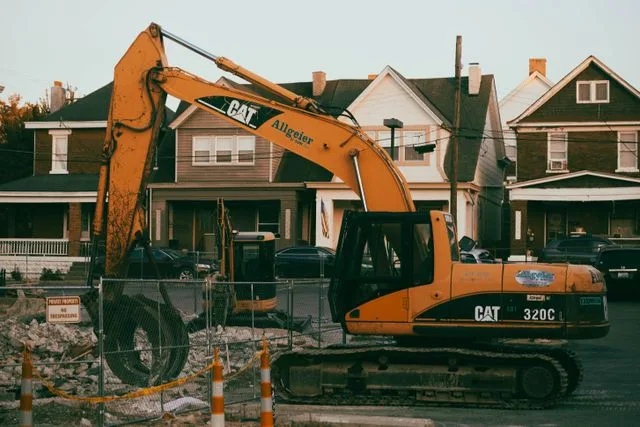
- You’ve renovated, or you’re about to. Renovations can create new depreciation deductions for items you buy and install yourself, because those aren’t second-hand items that came with the property. There may also be a deduction for what’s left unclaimed on certain items or building work that gets removed or replaced. That second one has a catch: once demolition starts, the evidence supporting it can be gone. If a renovation is coming, the inspection needs to happen before work begins. More on scrapping on renovations.
- You’ve bought a commercial, or fitted out a tenancy. Commercial sits outside the 2017 restriction entirely, and fit-outs tend to carry significant value that owners and tenants overlook. See depreciation on commercial property.
- You’ve owned the property for years without a schedule. More common than you’d think, and it’s usually because nobody ever raised it. The building doesn’t stop depreciating because no one measured it, and the age of the property doesn’t rule a schedule out on its own. What matters is when construction started and what’s happened to the property since. Whether anything can be done about previous years is a question for your accountant, but the schedule itself can still be prepared.

How do you choose a quantity surveyor?
Choosing a quantity surveyor for your report is relatively straight forward and these are some of things worth considering if you are in the market for one:
Are they qualified for this specific work? Membership of the Australian Institute of Quantity Surveyors is the professional benchmark. Ask directly or you may be able to find it on their website.
What’s the turnaround? Ours runs from receipt of all requested information and the inspection being completed, and we say so rather than quoting a number that assumes everything arrives on day one.
Does the report cover the full claim period? A schedule should run the life of the claim, not a handful of years. For the standard 2.5% rate, Division 43 capital works deductions generally run up to 40 years from completion of construction.
You’ll also see fee guarantees offered around the industry, and they vary, so read what they actually cover.
Ours: if we can’t deliver at least double our fee in deductions in the first full financial year, there will be no charge for our service.
Getting started
A quantity surveyor’s job on an investment property is to establish, with evidence, what the building cost and what’s inside it, so your accountant has accurate figures to work from.
What those figures mean for your tax position is a conversation to have with your accountant once the report is in hand.
TDA is an AIQS-certified practice preparing depreciation schedules and property valuations across Australia.
Our schedules start from $450 + GST and the reports are completed within 3 to 5 business days from receipt of all requested information and inspection completed.
Order a depreciation schedule or call 1300 417 317 for a complimentary quote.