Most property investors know they can claim depreciation. Far fewer understand that there are two completely separate claims sitting inside every schedule and that missing one of them, or misunderstanding who can access it, can mean thousands of dollars left unclaimed every year.
Division 40 and Division 43 are the two halves of a property depreciation claim. Division 40 covers removable plant and equipment (ovens, carpets, air conditioning, blinds), claimed over each item’s effective life. Division 43 covers the building structure (walls, floors, roofing), generally claimed at 2.5% a year for up to 40 years from completion of construction. A depreciation schedule from a quantity surveyor sets out both in one report.
The key eligibility point: since 9 May 2017, Division 40 deductions on previously used plant in second-hand residential property are restricted to the original owner or installer. Division 43 capital works are unaffected and typically make up the large majority of a residential claim. What you can claim depends on the property and your circumstances, so confirm your position with your accountant.
What is the difference between Division 40 and Division 43?
The simplest way to think about it: Division 43 is the building itself, and Division 40 is what goes into it.
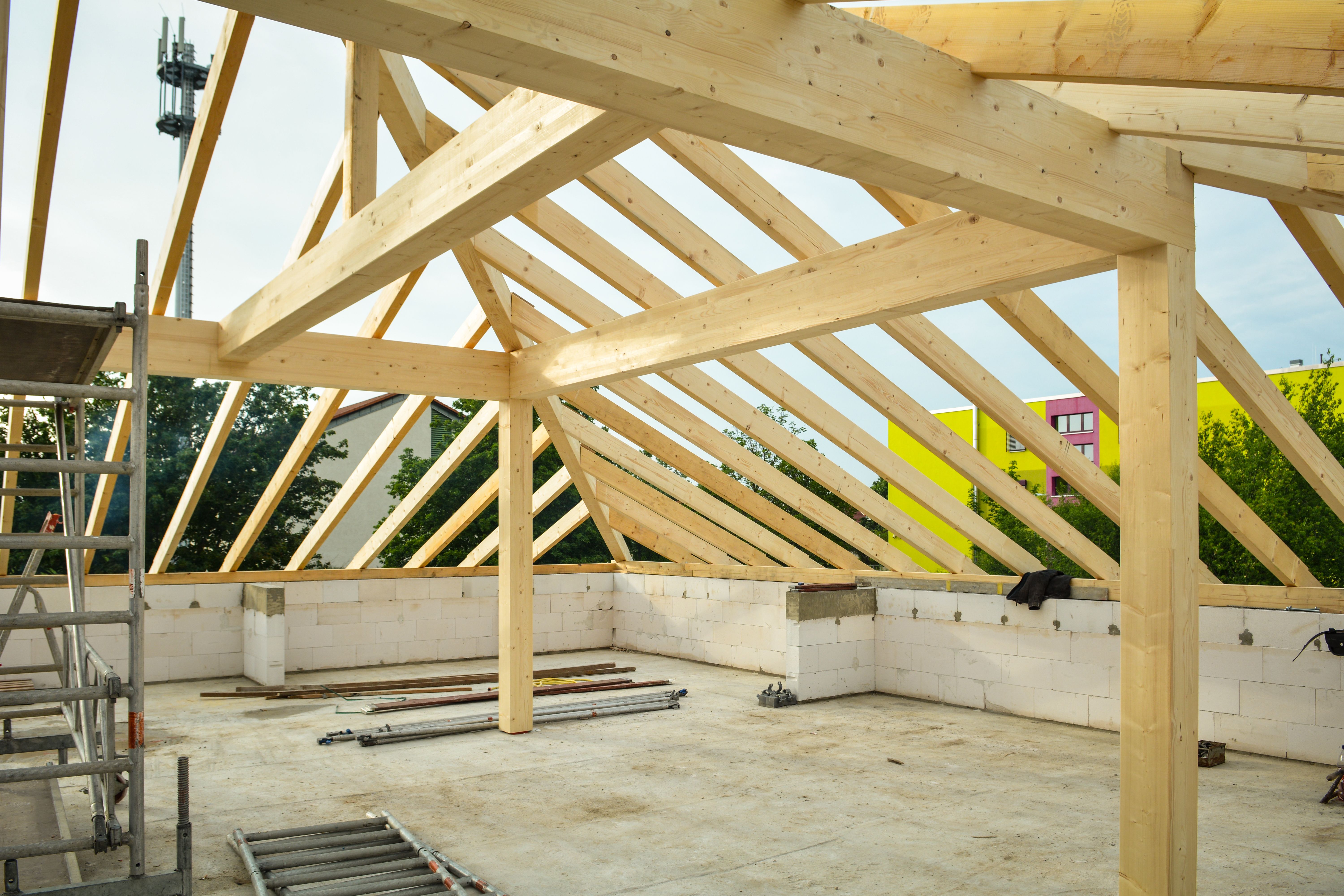
Division 43 (capital works) covers the structure and fixed components of the property: the walls, floor slabs, roofing, brickwork, and built-in elements that form part of the building itself. Division 40 (plant and equipment) covers the removable assets inside the property; the items that could, in principle, be taken out without structural damage, such as carpets, blinds, ovens, and air conditioning units.
The two divisions claim differently. Capital works are claimed at a fixed annual rate over a long period. Plant and equipment is depreciated over each individual asset’s effective life, using either the prime cost or diminishing value method.
A depreciation schedule from a quantity surveyor covers both. Understanding which assets fall into which category, and at what rate, is what makes the difference between a complete claim and a partial one.
| – | Division 40 | Division 43 |
|---|---|---|
| Covers | Removable plant and equipment | Building structure and fixed works |
| Examples | Ovens, carpets, air con, blinds | Walls, floor slabs, roofing, brickwork |
| How claimed | Over each item’s effective life | 2.5% a year (4% for limited categories) |
| Method | Prime cost or diminishing value | Fixed annual rate |
| Duration | Until written down to zero | Up to 40 years from completion of construction |
| Second-hand residential, after 9 May 2017 | Restricted to original owner or installer | Unaffected |
What is Division 43 (capital works)?
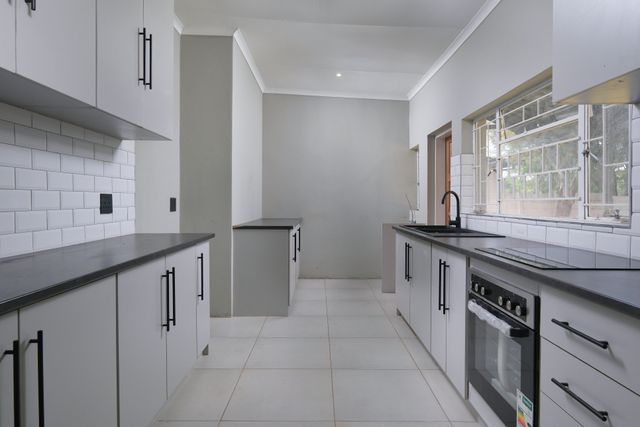
Division 43 lets you claim a deduction for the cost of constructing or improving a building used to produce income. The claim is not based on what you paid for the property, it is based on the cost of the original construction work, or any qualifying renovation carried out by a previous or current owner.
Rate and duration
Division 43 capital works are generally claimed at 2.5% a year for up to 40 years from completion of construction (a 4% over 25 years rate applies to limited categories). The 2.5% rate applies to most residential and commercial properties where construction commenced after the relevant ATO dates. The 4% rate applies to a limited range, including build-to-rent developments where construction commenced after 9 May 2023, and certain short-term accommodation and industrial properties.
This means a property with $400,000 in qualifying construction costs would generate a capital works deduction of $10,000 a year at the 2.5% rate, for up to 40 years from when construction was completed.
Construction date eligibility
Whether you can claim Division 43 depends on when construction commenced, not when you bought the property.
| Property type | Construction must have commenced after | Standard rate |
|---|---|---|
| Residential rental | 15 September 1987 | 2.5% / 40 years |
| Commercial (general) | 20 July 1982 | 2.5% / 40 years |
| Short-term traveller accommodation | 27 February 1992 | 4% / 25 years |
| Build-to-rent (active, new) | 9 May 2023 | 4% / 25 years |
If construction commenced before the applicable date, you cannot claim the original build. However, if a previous owner completed renovations or structural improvements after the eligible date, those renovations may still be claimable for the remainder of the 40-year period. Renovations done by a previous owner do not reset the clock, you inherit whatever is left of the 40-year period on that work.
What counts as capital works
Capital works include the initial building structure, qualifying structural improvements such as driveways, fences and retaining walls, extensions and additions, and renovations that alter the structural fabric of the property: new bathrooms, kitchens, tiling, brickwork. It does not include cosmetic repairs or removable items, which belong under Division 40.
What is Division 40 (plant and equipment)?
Division 40 covers assets that have a limited effective life and decline in value over time. These are typically the movable or mechanical items found in and around a property: carpets, blinds, ovens, dishwashers, air conditioning units, hot water systems, ceiling fans, smoke detectors, and similar items.
How effective life works
Plant and equipment are depreciated over its effective life, by the prime cost or diminishing value method. Effective lives are set by the ATO’s Income Tax (Effective Life of Depreciating Assets) Determination 2025 (LI 2025/20), which replaced the previous 2015 Determination on 16 September 2025. The published effective lives were not changed in that transition.
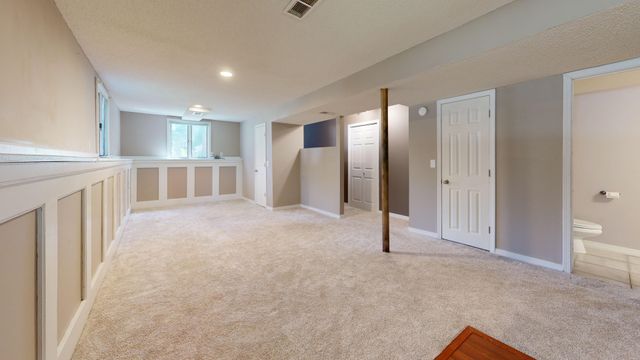
As a simplified example: carpet has an 8-year effective life under LI 2025/20. Using the prime cost method, a $4,000 carpet depreciates at $500 a year. Using the diminishing value method, the deduction is higher in the early years and tapers as the written-down value falls.
Division 40 deductions run until the asset is written down to zero, or until the asset is disposed of, at which point a balancing adjustment applies. Unlike Division 43, there is no fixed 40-year window, the timeline is set by each individual asset’s effective life.
The post-2017 restriction
This is the most important eligibility rule for Division 40, and it applies to every second-hand residential property purchased after 9 May 2017.
Since 9 May 2017, Division 40 deductions on previously used plant in second-hand residential property are restricted to the original owner or installer. New property, new plant the investor installs, substantially renovated property and commercial property are not affected.
Division 43 capital works are unaffected and typically make up the large majority of a residential claim.
In practical terms: if you purchased a second-hand residential property after 9 May 2017, you cannot claim depreciation on items like carpets, blinds, or appliances that were already in the property when you bought it. You can still claim any new assets you install after purchase. And you can still claim the full Division 43 capital works deduction, which, for most properties, is the larger of the two.
What can you claim on a second-hand or older property?
The answer depends on when the property was purchased and when it was constructed.

Purchased after 9 May 2017 (second-hand residential)
Division 40 deductions are restricted to plant and equipment the investor installs after purchase. Existing items in the property at settlement are not claimable unless you were the original owner or installer of those assets.
Division 43 is fully available for the remainder of the 40-year period from the date the relevant construction or renovation was completed, provided construction commenced after the applicable date.
New residential property (any purchase date)
Both Division 40 and Division 43 are fully available. A new property is one that has not previously been used or sold as residential premises. If you are buying off the plan or a newly completed build, neither restriction applies.
Commercial property (any purchase date)
The post-2017 plant and equipment restriction does not apply to commercial property. Both divisions are available regardless of when the property was purchased.
Older properties and renovations
A residential property built before 15 September 1987 is not eligible for Division 43 on the original structure. However, structural renovations completed after that date by any owner including previous owners are claimable for the remaining 40-year period from the date those works were completed.

A quantity surveyor will identify which construction and renovation works are eligible, estimate the construction costs where records are not available, and calculate the deduction across both divisions.
How long do these deductions last?
The two divisions run on different clocks.
Division 43 runs for up to 40 years from the date construction of the relevant works was completed. If you buy a property partway through that 40-year window, you inherit whatever period remains. When the 40 years are up, the Division 43 deduction ends. It does not go on indefinitely.
Division 40 runs until each asset is written down to zero, or until the asset is disposed of or replaced. There is no shared endpoint, a dishwasher with a 10-year effective life finishes at a different time from a hot water system with a 12-year life. When an asset is removed, demolished, or replaced before it reaches zero, the remaining undeducted value may be written off in the year of disposal through a balancing adjustment. This is sometimes called scrapping.
For most investment properties, the Division 43 claim runs longer but at a fixed rate. The Division 40 claim is more variable: higher in the early years (particularly under the diminishing value method), tapering as assets are written off.
Who works out these deductions?
The ATO recognises quantity surveyors (TR 97/25) as appropriately qualified to estimate construction costs where actual costs are not known. Accountants, valuers and real estate agents generally are not.
This matters because, for most investment properties, the original construction costs are not readily available to a new purchaser. A quantity surveyor can estimate those costs and calculate the full Division 43 deduction, in addition to identifying and valuing the Division 40 assets in the property.
Getting both in one schedule
A tax depreciation schedule from TDA covers both Division 40 and Division 43 in a single report, prepared by qualified Quantity Surveyors and set out year by year.
Residential schedules from $450 plus GST. Reports are completed within 3 to 5 business days from receipt of all requested information and inspection completed.
If we cannot deliver at least double our fee in deductions in the first full financial year, there is no charge for our service.
To order a depreciation schedule, or to ask whether your property qualifies, contact TDA on 1300 417 317.
What you can claim depends on the type of property, when it was built, and your individual circumstances. Speak with your accountant to confirm how these deductions apply to your situation.
This article is general information only. It is not tax, financial or investment advice. Deductions depend on individual circumstances. Consult your accountant before making any decision about your tax position.