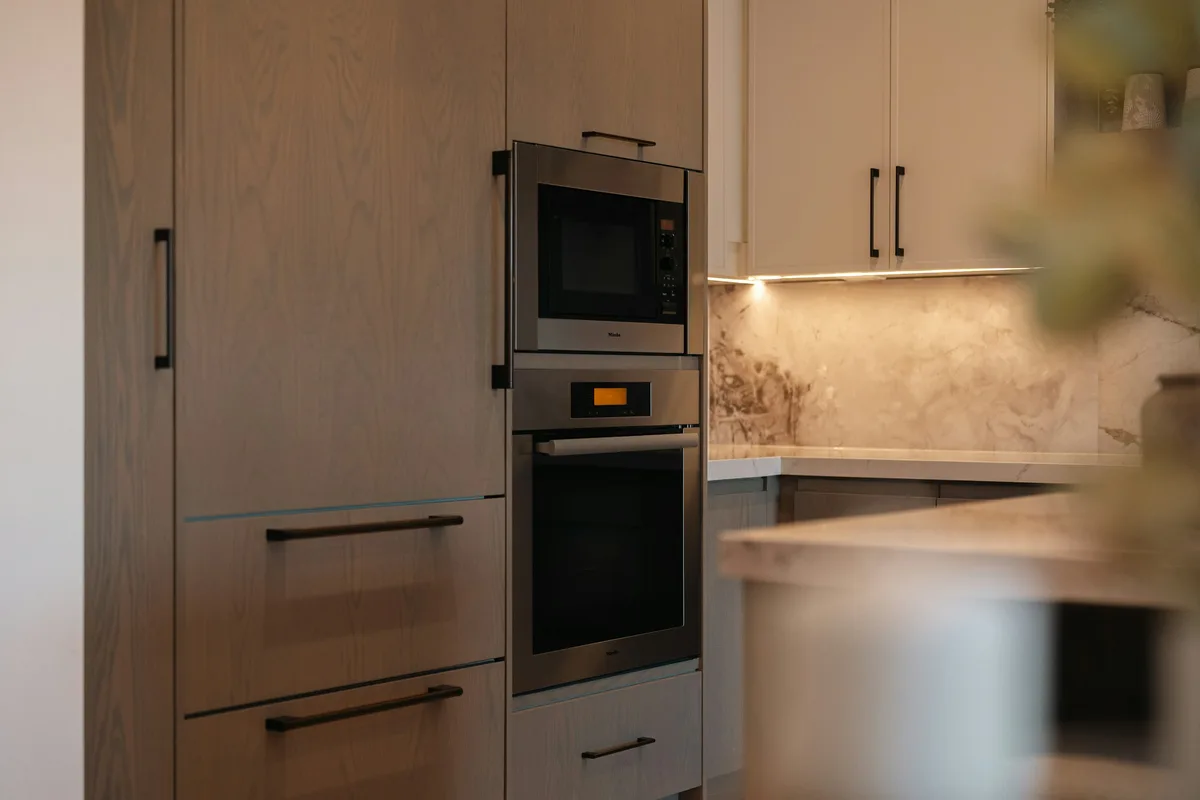
Prime cost is the ATO’s name for straight line depreciation. It spreads the cost of an asset evenly over its effective life, so the deduction is generally the same amount each full year. For a rental property, it’s one of two ways to work out the decline in value of plant and equipment. That covers items such as an oven, carpet or a hot water system.
This guide covers the prime cost formula and how a part year works. It also compares prime cost with the diminishing value method and covers a few rules that are easy to miss. Which method suits you is a question for your accountant.
What is prime cost depreciation?
It’s a way of claiming the same slice of an asset’s cost each year until the cost is used up.
The ATO says that under the prime cost method, “the decline in value each year is a uniform amount of the original value over its effective life”. Decline in value is the tax term for how much an asset’s value drops over a year. Effective life is the estimated period an asset can be used to earn income, or for certain other purposes set out in the tax law. It’s one of the inputs used to work out the asset’s decline in value.
Say an asset has an effective life of 8 years. Prime cost generally lets you claim one eighth of its cost each full year. Accountants often call this straight line depreciation, because a graph of the deductions is a flat line.
Prime cost applies to plant and equipment under Division 40 of the tax law. It doesn’t apply to the building itself. Our guide to Division 40 and Division 43 explains that split.
What is the prime cost formula?
Cost, multiplied by the share of the year you held the asset, multiplied by 100% divided by its effective life.
The ATO sets out the prime cost formula as follows.
Asset’s cost × (days held ÷ 365) × (100% ÷ asset’s effective life).
Here’s what each part means.
- Asset’s cost is the amount used to work out its decline in value. It generally includes the purchase price and eligible costs of getting the asset installed and ready for use.
- Days held is the number of days in the income year that you held the asset and used it. It also counts days the asset was installed ready for use. For a full year, this is 365, so the fraction becomes 1.
- Effective life is the estimated period, in years, that the asset can be used to earn income, or for certain other purposes set out in the tax law.
For example, take an asset that costs $4,000 with an effective life of 8 years. These figures are illustrative only. For a full year, the calculation is $4,000 × (365 ÷ 365) × (100% ÷ 8), which is $500. Under prime cost, the calculation is $500 in each full year until the $4,000 has been claimed.
How does prime cost work in the first year?
If you only held the asset for part of the year, the first year’s amount is cut back to match.
Say you bought that same $4,000 asset and had it installed ready for use on 1 January 2027. You’d hold it for 181 days in the 2026-27 income year. The calculation becomes $4,000 × (181 ÷ 365) × (100% ÷ 8), which is about $247.95.
A part-year amount is lower because it covers fewer days. If the asset remains eligible, further amounts may generally be claimed in later years under the usual rules. In this example, the reduced first-year amount means the final amount falls in a ninth income year. The asset’s effective life stays at 8 years for the calculation. The days-held fraction works the same way under the diminishing value method.
The ATO also says your deduction must be reduced for any private use of the asset. For example, if you or your family use an asset privately, rather than only to earn rental income, the amount may need to be reduced.
How is prime cost different from diminishing value?
Prime cost claims the same amount each year. Diminishing value claims more in the early years and less later on.
The ATO describes the diminishing value method as one where “the decline in value each year is a constant portion of the remaining value”. Its formula uses 200% rather than 100%, divided by the effective life. That rate is applied to the asset’s base value rather than its original cost. The base value is generally the asset’s cost in its first year. In later years, it generally starts with the opening adjustable value, which is the cost less the decline in value worked out so far. Relevant later costs can also be added when working out the base value. Our article on diminishing value depreciation walks through that method in detail.
Using the same illustrative $4,000 asset with an 8-year effective life, held for full years:
- Year 1: prime cost $500, diminishing value $1,000.
- Year 2: prime cost $500, diminishing value $750.
- Year 3: prime cost $500, diminishing value $562.50.
- Year 5: prime cost $500, diminishing value $316.41.
- After 5 years in total: prime cost $2,500, diminishing value about $3,050.78.
From year 4 in this example, the prime cost amount is the larger of the two each year. Both methods work out the decline in value of the same $4,000 asset, but the timing differs. Diminishing value gives larger amounts earlier and smaller amounts later. The actual calculations can change if the asset’s cost, effective life, use or eligibility changes.
These are calculations, not a prediction of anyone’s tax outcome. How the timing affects you depends on your income, your other deductions and your plans for the property. That’s a decision to make with your accountant.
Can I switch between prime cost and diminishing value?
Not for the same asset. Once you’ve chosen a method for an asset, you generally can’t change it.
The ATO’s Guide to depreciating assets 2026 says “once you have chosen a method for a particular asset, you can’t change to the other method for that asset”. You can choose a different method for a different asset. In some cases you don’t get a choice. For example, for certain assets acquired from an associate, you must use the same method the associate used.
The same guide covers effective life. You generally make that choice by the time you lodge your tax return for the year the asset’s start time occurs. You can either use the effective life the Commissioner determines, or work out your own reasonable estimate. Our guide to ATO depreciation rates for rental property covers effective lives in more detail.
Because the choice sticks, it’s worth seeing both sets of figures before the first return that claims the asset. A depreciation schedule can set out both methods side by side for your accountant.
What happens if an asset’s cost changes later?
In certain cases, the prime cost formula changes to account for later costs or a recalculated effective life.
The ATO’s guide says you must use an adjusted prime cost formula in two cases. One is where you include an amount in the second element of an asset’s cost in a later year. The other is where you recalculate the asset’s effective life. The second element of cost is generally money spent later that adds to the asset, such as an improvement to it.
In those cases, you start with the opening adjustable value plus any second element amounts for that year. That figure is multiplied by the days-held fraction, then by 100% divided by the asset’s remaining effective life. The opening adjustable value is the asset’s cost less the decline in value already claimed, as at the start of the year. Your accountant will handle this on your return, but it’s useful to know why a figure can change partway through a schedule.
Do the low-value pool rules work the same way?
Not quite. Prime cost affects which assets can go into a low-value pool later.
A low-value pool lets you group cheaper assets and claim them together at set rates. The ATO says a low-cost asset is one that costs less than $1,000 after any GST credits you’re entitled to claim. A low-value asset is one that has been depreciated over one or more years and has a written-down value under $1,000. It qualifies “only if you’ve previously worked out deductions for it using the diminishing value method”.
In plain terms, an asset that has been depreciated using prime cost can’t qualify for the pool as a low-value asset, even once its value drops under $1,000. Low-cost assets have a separate entry rule, based on their cost after GST credits. Pooled assets are claimed at 37.5% a year, with 18.75% in the first year. One more rule applies. Once you choose to pool a low-cost asset, the ATO says you must pool all other low-cost assets you start to hold in that year and later years.
Does prime cost apply to the building?
No. The building is claimed separately, at a fixed rate set by law.
The building and qualifying structural improvements fall under capital works (Division 43). The ATO says the rate for these capital works is generally 2.5% or 4% per year. The rate depends on the type of construction and when it started. Neither prime cost nor diminishing value applies to these deductions.
Special rules also generally restrict claims for second-hand plant and equipment in established homes. The restriction applies if you bought an established residential property after 7:30pm (AEST) on 9 May 2017. In that case you generally can’t claim decline in value for second-hand plant and equipment that came with the property, unless an exception applies. Eligible new assets you buy for the rental may be depreciated under either method, subject to the usual rules. Capital works aren’t affected by this second-hand asset restriction. Our guide to second-hand property depreciation covers the detail.
How do I see both methods for my property?
Start with an estimate. A schedule then gives your accountant property-specific figures to work from.
Our free property depreciation calculator gives an indicative estimate using the diminishing value method. The estimate is indicative only and must not be used to claim deductions in a tax return.
A depreciation schedule prepared by a quantity surveyor sets out the depreciation that may be available for your property, year by year. TDA’s schedules show plant and equipment figures under both prime cost and diminishing value, so your accountant can compare them before a method is chosen.
The short version
- Prime cost is the ATO’s straight line method. It generally claims the same amount each full year over the asset’s effective life.
- The formula is: asset’s cost × (days held ÷ 365) × (100% ÷ effective life).
- Diminishing value gives larger amounts in the early years and smaller amounts later. The main difference between the methods is timing.
- Once you choose a method for an asset, you generally can’t switch that asset to the other method.
- Assets claimed under prime cost can’t later join a low-value pool as low-value assets.
- The building itself is claimed under capital works at a fixed rate, not under either method.
Where to from here
Which method suits your situation depends on your circumstances, so speak with your accountant about how this applies to you.
TDA prepares tax depreciation schedules and property valuations across Australia. To get a schedule for your property, you can order a depreciation schedule or call us on 1300 417 317.
This article is general information only and isn’t tax, financial or investment advice. TDA does not provide tax, financial or investment advice. Speak with your accountant or adviser about your own circumstances.